

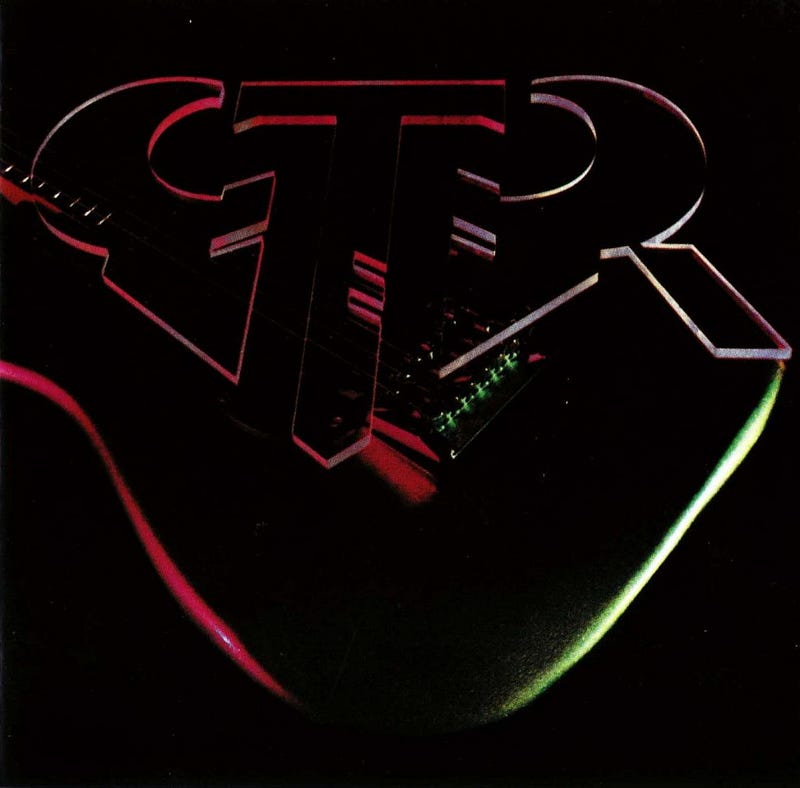
Band: GTR
Album: GTR
Year: 1986
Genre: Progressive Rock / AOR / Arena Rock
Label: Arista
Nation: UK 🇬🇧
Score:

AUDIO RECENSIONE
AUDIO REVIEW
GTR.
Sappiate che, se state pensando all’automobile, è il caso proprio di dire che siete fuori strada.
Perché in questo caso tale abbreviazione sta per “guitar”, usata da molti studi di registrazione sulle console di missaggio per identificare le tracce di chitarra.
E c’è ben poco da stupirsene dal momento che dietro a questo moniker si celano dei veri e propri guitar heroes come Steve Howe (Yes) e Steve Hackett (Genesis).
Proprio queste due leggende rappresentano i pilastri su cui GTR venne fondato nella Londra del 1985, durante un periodo di interregno in cui Howe aveva appena lasciato gli Asia, mentre Hackett stava vivendo una fase difficile della propria carriera solista, con vendite inferiori alle aspettative.
Fu l’ex manager degli Yes, Brian Lane, a suggerire a Howe di coinvolgere Hackett in un progetto capace di fondere un sound più accessibile e radiofonico, tipico dell’AOR (già perseguito negli Asia), senza però rinunciare al virtuosismo e al tecnicismo propri del Progressive Rock.
Un sound che richiama quello che alcuni anni più tardi verrà riproposto anche da Jeff Cannata nel suo Watching the World (1993), ma con una significativa peculiarità destinata a renderlo immediatamente riconoscibile: l’assenza delle tastiere in favore di una presenza titanica delle chitarre.
GTR.
If your first thought was the Nissan sports car, you’re on the wrong track.
In this case, GTR stands for “guitar”, the abbreviation long used on studio mixing consoles to identify guitar tracks.
That should come as no surprise when you discover that the project brought together two genuine guitar heroes: Steve Howe (Yes) and Steve Hackett (Genesis).
These two legendary musicians formed the backbone of GTR, a supergroup born in London in 1985 during a transitional period in both of their careers. Howe had recently parted ways with Asia, while Hackett was going through a difficult spell as a solo artist, with sales falling well short of expectations.
It was former Yes manager Brian Lane who suggested that Howe team up with Hackett on a project capable of combining the melodic accessibility and radio-friendly appeal of AOR—an approach Howe had already explored with Asia—without sacrificing the virtuosity and sophistication that had defined their Progressive Rock roots.
The result is a sound that would later find echoes in Jeff Cannata‘s Watching the World (1993), yet with one distinctive characteristic that immediately sets it apart: keyboards are almost entirely absent, replaced instead by an overwhelming wall of guitars that defines the album’s unmistakable identity.
L’apertura affidata a ‘When the Heart Rules the Mind’ non potrebbe essere più emblematica.
Il singolo che avrebbe trainato il successo dell’album racchiude infatti tutto ciò che i GTR avevano promesso sulla carta: una melodia immediata, un ritornello destinato a rimanere impresso sin dal primo ascolto e una prova vocale impeccabile di Max Bacon, il tutto sorretto da un intreccio chitarristico nel quale lo stile elegante di Howe e quello più lirico di Hackett convivono senza mai pestarsi i piedi.
Ma sarebbe un errore liquidare questo lavoro come un semplice disco costruito attorno alla sua hit.
Brani come ‘The Hunter’ e ‘Here I Wait’ mantengono viva quella vena radiofonica senza rinunciare a raffinate soluzioni armoniche, mentre episodi più articolati quali ‘Jekyll and Hyde’ riportano maggiormente a galla il passato Progressive Rock dei due fondatori grazie a una costruzione meno prevedibile e a un continuo rincorrersi tra fraseggi, cambi di dinamica e intrecci strumentali.
L’assenza delle tastiere contribuisce inoltre a conferire al disco una personalità decisamente riconoscibile.
Le chitarre sintetizzate di Howe e Hackett non si limitano infatti a sostituire il classico tappeto di synth, ma diventano esse stesse l’elemento portante dell’intera architettura sonora, dando vita a un timbro che ancora oggi rappresenta una curiosità piuttosto rara all’interno del panorama AOR degli anni Ottanta.
Naturalmente non tutto convince allo stesso modo.
Alcune composizioni, soprattutto nella seconda metà del disco, sembrano talvolta trattenute dal desiderio di non sbilanciarsi né verso il Progressive Rock più elaborato né verso il Rock Melodico più immediato, finendo così per rimanere in una sorta di terra di mezzo.
A riprova di ciò mi viene in mente l’ultimo brano, ‘Imagining’.
Eppure è proprio questa continua ricerca di equilibrio a costituire il fascino del progetto: due musicisti con personalità fortissime che, invece di rinunciare alle rispettive identità, provano ostinatamente a farle convivere nello stesso spazio sonoro.
Degna di nota la sognante ‘Sketches In The Sun’, bellissima composizione strumentale che, con i suoi arpeggi e le sue vivaci melodie, continua a emozionarmi ogni volta che l’ascolto.
Opening with ‘When the Heart Rules the Mind’ could hardly be more appropriate.
The single that would go on to define the album perfectly captures everything GTR had promised on paper: an instantly memorable melody, a chorus that sticks after just one listen, and an outstanding vocal performance from Max Bacon, all supported by an intricate guitar interplay in which Howe’s refined elegance and Hackett’s more lyrical style complement one another without ever competing for the spotlight.
But dismissing this as merely an album built around its hit single would be a mistake.
Tracks such as ‘The Hunter’ and ‘Here I Wait’ retain that radio-friendly appeal without sacrificing harmonic sophistication, while more ambitious pieces like ‘Jekyll and Hyde’ bring the founders’ Progressive Rock heritage back to the forefront through less predictable songwriting, shifting dynamics and a constant exchange of intricate musical ideas.
The absence of keyboards also gives the album a remarkably distinctive personality.
Howe and Hackett’s synthesised guitars do far more than replace the traditional layers of keyboards: they become the very foundation of the album’s sonic architecture, creating a sound that remains surprisingly unique within the AOR landscape of the 1980s.
That said, not everything works equally well.
Some of the songs, particularly during the second half of the album, occasionally seem reluctant to fully embrace either the more elaborate side of Progressive Rock or the immediacy of Melodic Rock, leaving them suspended somewhere between the two.
‘Imagining’, the closing track, is perhaps the clearest example of this balancing act.
Yet it is precisely that constant search for equilibrium that makes the project so compelling: two musicians with unmistakably strong artistic identities striving to make their contrasting approaches coexist rather than overshadow one another.
Special mention must go to the beautiful instrumental ‘Sketches in the Sun’, whose delicate arpeggios and uplifting melodies continue to move me every time I hear it.
L’album, nonostante alcuni pareri contrastanti della critica musicale, fece il botto assicurandosi l’undicesimo posto della Billboard 200 e conquistando addirittura l’ambito Disco d’Oro.
Un lavoro spettacolare, unico nel suo genere… e purtroppo unico anche nel senso più letterale del termine, poiché non avrebbe mai avuto un seguito.
L’approccio quasi maniacale di Howe alla produzione si tradusse in mesi trascorsi a rifinire ogni minimo dettaglio del sound, fino a superare abbondantemente il budget preventivato e indebitare l’intera band.
L’insoddisfazione già presente fra i membri — soprattutto in Hackett, il quale avrebbe preferito investire quelle risorse nella strumentazione piuttosto che in interminabili sessioni di perfezionamento in studio — non fece che crescere, trovando il punto di rottura al termine del tour promozionale.
A far traboccare definitivamente il vaso contribuirono anche i metodi manageriali poco democratici di Brian Lane, ormai mal sopportati da buona parte della band.
“È stato interessante per circa cinque minuti“, avrebbe dichiarato anni dopo Hackett ripensando all’esperienza dei GTR.
Non posso però che dissentire.
A distanza di quasi quarant’anni questo disco continua a rappresentare la testimonianza di ciò che può nascere quando due autentici fuoriclasse decidono di mettere il proprio talento al servizio di un’idea comune.
Purtroppo, le inevitabili rivalità artistiche, le divergenze economiche e le differenti visioni sul futuro del progetto impedirono ai GTR di compiere quel passo successivo che, con ogni probabilità, avrebbe potuto consacrarli fra le realtà più interessanti del panorama Rock degli anni Ottanta.
Non sapremo mai quale strada avrebbero percorso Howe e Hackett se avessero continuato a remare nella stessa direzione.
Ma forse è proprio questo il fascino dei GTR: quello di rappresentare una splendida occasione incompiuta, un progetto tanto effimero quanto irripetibile.
E allora non resta che recuperare questo piccolo gioiello, abbassare la puntina sul vinile e lasciare che siano quelle due chitarre a raccontarci la storia di ciò che avrebbero potuto diventare.
Despite receiving a mixed response from parts of the music press, the album proved to be a commercial success, reaching No. 11 on the Billboard 200 and even earning Gold certification.
A remarkable record, unique in every sense of the word… and, unfortunately, unique in the most literal sense as well, since it would never receive a follow-up.
Howe’s almost obsessive approach to production resulted in months spent polishing every minute detail of the recordings, pushing the project well beyond its original budget and leaving the band burdened with debt.
Tensions that had already begun to surface—particularly on Hackett’s side, as he would have preferred to invest those resources in equipment rather than endless studio refinements—continued to escalate, eventually reaching breaking point by the end of the promotional tour.
To make matters worse, Brian Lane’s increasingly autocratic management style had become a growing source of frustration for much of the band.
“It was interesting for about five minutes,” Hackett would later say when reflecting on his time with GTR.
I have to disagree.
Nearly forty years later, this album still stands as proof of what can happen when two exceptional musicians choose to place their talents in the service of a shared artistic vision.
Sadly, artistic rivalries, financial pressures and conflicting ideas about the project’s future prevented GTR from taking the next step—one that could very well have established them as one of the most compelling rock acts of the 1980s.
We’ll never know what path Howe and Hackett might have followed had they continued pulling in the same direction.
Perhaps that’s exactly what makes GTR so fascinating: they remain one of rock’s great “what ifs”, a project as short-lived as it was extraordinary.
All that’s left to do is rediscover this overlooked gem, drop the needle on the vinyl and let those two guitars tell the story of everything that might have been.
YOU MAY ALSO LIKE


TRACKLIST
- When the Heart Rules the Mind (5:24)
- The Hunter (4:51)
- Here I Wait (4:54)
- Sketches in the Sun (2:29)
- Jekyll and Hyde (4:42)
- You Can Still Get Through (4:53)
- Reach Out (Never Say No) (4:00)
- Toe the Line (4:29)
- Hackett to Bits (2:10)
- Imagining (5:49)
LINE-UP
Lead vocals: Max Bacon
Guitar, backing vocals: Steve Howe
Guitar, backing vocals: Steve Hackett
Bass guitar, backing vocals: Phil Spalding
Drums, percussion: Jonathan Mover
SUPPORT THE ARTIST


Leave a Reply