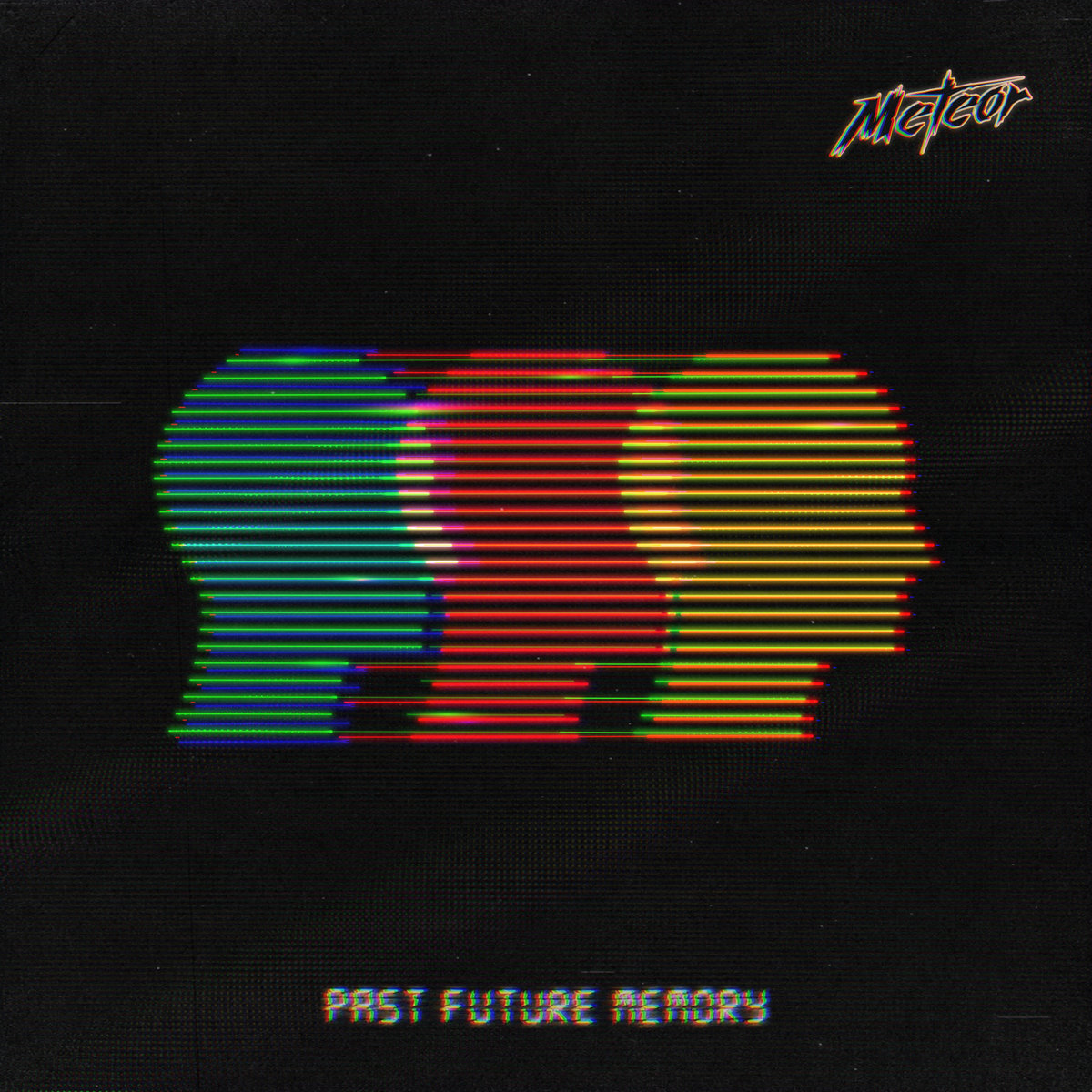


Band: Meteor
Album: Past Future Memory
Year: 2026
Genre: Retrowave / Darksynth / Neon Metal
Label: Self-released
Nation: Colombia 🇨🇴
Score:

AUDIO RECENSIONE
AUDIO REVIEW
L‘Outrun, devo ammetterlo, non è propriamente un genere che mi entusiasma.
Essendo un synthian di seconda generazione, quella inaugurata da band come The Midnight ed Kalax, faccio infatti fatica ad apprezzare dischi completamente strumentali nell’ambito della Retrowave, non trovandovi sempre qualcosa di sufficientemente stimolante da catturare la mia attenzione, a differenza di generi come lo Shred, dove il virtuosismo strumentistico è protagonista indiscusso.
Eppure, quasi per caso, mi sono appena imbattuto in un piccolo gioiellino a cui non avevo ancora prestato la dovuta attenzione, complice un’uscita estiva che, per una serie di motivi, mi aveva fatto rimandare l’ascolto.
Proprio per questo la recensione arriva con qualche mese di ritardo rispetto alla pubblicazione dell’album Past Future Memory di Meteor.
Dietro il nome d’arte Meteor si cela Jorge Reyes, musicista colombiano proveniente dalla scena Rock, che nel 2015 ha trasformato la propria passione per l’elettronica anni ’80 in un progetto solista nel quale Synthwave, Darksynth, Rock e Metal convivono all’interno di un universo narrativo personale.
Dopo oltre un decennio di pubblicazioni discografiche, Past Future Memory rappresenta la sua fase più introspettiva, utilizzando il linguaggio retrofuturistico, sintetizzato nell’ossimoro del titolo, per esplorare concetti come memoria, tempo, identità e conflitto interiore.
Entrando quindi nel vivo del disco, una delle prime cose che colpisce è proprio la capacità di Meteor di muoversi all’interno dell’Outrun senza rimanere necessariamente confinato nei cliché più prevedibili del genere.
E se già il titolo lascia presagire un viaggio tra passato e futuro, è soprattutto l’ascolto a confermare come queste due dimensioni vengano continuamente mescolate, con l’elettronica che si fa ora protagonista, ora semplice veicolo per sonorità provenienti da tutt’altra parte.
Outrun, I have to admit, is not exactly a genre that excites me.
As a second-generation synthian, the one inaugurated by bands such as The Midnight and Kalax, I actually struggle to appreciate completely instrumental records within Retrowave, as I do not always find something stimulating enough to capture my attention, unlike genres such as Shred, where instrumental virtuosity is the undisputed protagonist.
And yet, almost by chance, I have just stumbled upon a little gem that I had not yet paid the attention it deserved, partly because its summer release had, for a number of reasons, made me postpone listening to it.
This is precisely why this review arrives a few months late compared to the release of Past Future Memory by Meteor.
Behind the stage name Meteor lies Jorge Reyes, a Colombian musician coming from the Rock scene, who in 2015 turned his passion for ’80s electronics into a solo project in which Synthwave, Darksynth, Rock and Metal coexist within a personal narrative universe.
After more than a decade of releases, Past Future Memory represents his most introspective phase, using the retrofuturistic language condensed into the oxymoron of the title to explore concepts such as memory, time, identity and inner conflict.
Getting into the heart of the record, one of the first things that stands out is precisely Meteor‘s ability to move within Outrun without necessarily remaining confined to the genre’s most predictable clichés.
And if the title already hints at a journey between past and future, it is above all the listening experience that confirms how these two dimensions are constantly blended, with electronics now taking centre stage, now serving simply as a vehicle for sounds coming from somewhere completely different.
Un esempio particolarmente evidente è ‘The Man With Silver Wings’, traccia che già dal titolo sembra quasi strizzare l’occhio a ‘Surfing With The Alien’ ed all’immaginario del buon vecchio Joe Satriani.
Certo, lungi da me il voler comparare Meteor al maestro delle 6 corde, e pur tuttavia alcune delle melodie richiamano proprio quell’approccio diretto e melodico tipico dello Shred, fatto di fraseggi che sembrano quasi voler prendere il volo sopra la base ritmica.
La differenza sta principalmente nella mancanza proprio di quello strumento che normalmente sarebbe incaricato di farlo: la chitarra elettrica viene sostituita dall’elettronica e quelle stesse suggestioni vengono così filtrate attraverso synth e tastiere.
Ma non è l’unico momento in cui il nostro Meteor sembra voler far incontrare due mondi apparentemente distanti.
L’introduzione di ‘Core Breach’ è quasi ingannevole, poiché quel riff iniziale sembra richiamare terribilmente certi giri di chitarra e di corde che potremmo associare ai Rammstein.
Poi, improvvisamente, il pezzo cambia direzione e si lascia andare ad una melodia decisamente più vicina al Power Metal, con una struttura immediata e quasi anthemica.
È proprio questo continuo gioco di contaminazioni a rendere il pezzo particolarmente piacevole, tanto che finisce per essere uno di quelli che il sottoscritto ha maggiormente apprezzato, ed è proprio nei momenti in cui l’album si allontana maggiormente dall’Outrun più canonico che il nostro sembra trovare una delle sue dimensioni migliori.
Dopo questa parentesi più metallara, ‘Neural Highway’ ci riporta invece verso territori decisamente più Outrun, in una corsa elettronica a tutti gli effetti, adrenalinica e pulsante, con alcuni passaggi che sfiorano quasi la Techno e che mi hanno ricordato non poco quel tipo di Synthwave che potremmo associare ad artisti fissati su tematiche futuristiche come Morphoice e Scandroid.
Qui non c’è bisogno di particolari artifici: il pezzo parte, ingrana la marcia e corre; proprio questa immediatezza lo rende uno dei miei brani preferiti del platter.
A particularly evident example is ‘The Man With Silver Wings’, a track whose title alone seems almost to wink at ‘Surfing With The Alien’ and the imagery of the good old Joe Satriani.
Of course, far be it from me to compare Meteor to the six-string master, and yet some of the melodies clearly recall that direct and melodic approach typical of Shred, with phrases that seem almost intent on taking flight above the rhythmic foundation.
The main difference lies precisely in the absence of the instrument that would normally be responsible for doing so: the electric guitar is replaced by electronics, and those same suggestions are filtered through synths and keyboards.
But this is not the only moment when our Meteor seems intent on bringing two apparently distant worlds together.
The introduction to ‘Core Breach’ is almost deceptive, as that opening riff seems to recall terribly familiar guitar and string patterns that we might associate with Rammstein.
Then, suddenly, the track changes direction and gives way to a melody much closer to Power Metal, with an immediate and almost anthemic structure.
It is precisely this constant interplay of influences that makes the track particularly enjoyable, to the point that it ends up being one of the ones I appreciated most, and it is precisely in the moments when the album moves furthest away from the most canonical form of Outrun that our artist seems to find one of his strongest dimensions.
After this more metallic detour, ‘Neural Highway’ takes us back towards decidedly more Outrun territory, into a fully-fledged electronic race, adrenaline-fuelled and pulsating, with some passages that almost brush against Techno and reminded me quite a lot of the kind of Synthwave we might associate with artists obsessed with futuristic themes such as Morphoice and Scandroid.
There is no need for any particular tricks here: the track starts, shifts into gear and races forward; it is precisely this immediacy that makes it one of my favourite tracks on the platter.
Se ‘Neural Highway’ rappresenta il lato più dinamico del disco, ‘Burning Nightmares’ ne mostra invece quello più oscuro.
Qua Meteor sembra quasi essersi dato appuntamento in qualche squallido locale della periferia con Carpenter Brut, artista che prima di tutti lo ha introdotto al genere.
I sintetizzatori bassi e minacciosi, uniti ad una ritmica incalzante e pulsante, riportano immediatamente alla mente quella componente più aggressiva della Retrowave, con la presenza della chitarra (o comunque di un suono che ne richiama fortemente il carattere) che contribuisce a sottolineare il matrimonio tra il suo background elettronico e quello Metal (possiamo forse definirlo Neon Metal?).
Torniamo invece a sonorità più care a Scandroid con ‘Glassworld’, una vera bomba di orecchiabilità, profondamente Outrun che si fa ascoltare con una facilità quasi disarmante.
I synth freddi ed i pad sembrano quasi evocare l’idea stessa del vetro, dei frammenti taglienti e di un paesaggio futuristico nel quale ogni cosa appare tanto luminosa quanto gelida.
Il risultato è fortemente cinematografico, tanto che non sarebbe affatto difficile immaginarlo inserito all’interno della soundtrack di qualche film d’azione o di fantascienza.
E proprio quando sembra che il disco abbia già mostrato tutte le proprie carte, ecco arrivare ‘Hyper Striker’.
Qui il nostro autore decide di spingere ancora più in là il pedale del Metal, costruendo una traccia che sembra prendere una struttura Power, aggiungervi tastiere velocissime ed assoli melodici e poi rivestire il tutto con una bella mano di vernice futuristica.
In alcuni passaggi sembra quasi di risentire i DragonForce, con quelle cavalcate e quei giri di tastiera che sembrano usciti dall’opening di qualche anime giapponese.
Più cinematografica è invece ‘Refraction Of Truth’, un brano che potrebbe tranquillamente far parte della colonna sonora di un videogame, grazie ad una melodia dal forte carattere narrativo.
Meteor rallenta poi con ‘Dunes Of Mars’, interessante Mid-Tempo che ci porta dalle luci al neon delle metropoli direttamente sulla superficie del pianeta rosso.
Non propriamente Ambient, ma fortemente evocativo, grazie a suoni elettronici disturbati che sembrano il vento marziano ed alla chitarra dell’assolo, che aggiunge un piacevole tocco Rock.
If ‘Neural Highway’ represents the album’s most dynamic side, ‘Burning Nightmares’ instead reveals its darker one.
Here Meteor almost seems to have arranged a meeting with Carpenter Brut in some seedy suburban venue, the artist who first introduced him to the genre.
The low, menacing synths, combined with a driving and pulsating rhythm, immediately bring to mind that more aggressive side of Retrowave, with the presence of the guitar (or at least a sound that strongly recalls its character) helping to underline the marriage between his electronic and Metal backgrounds (could we define it as Neon Metal?).
We return instead to sounds closer to Scandroid with ‘Glassworld’, an absolute earworm, deeply rooted in Outrun and almost disarmingly easy to listen to.
The cold synths and pads seem almost to evoke the very idea of glass, sharp fragments and a futuristic landscape in which everything appears both luminous and icy.
The result is highly cinematic, to the point that it would be easy to imagine it being featured on the soundtrack of some action or science-fiction film.
And just when it seems the album has already shown all its cards, along comes ‘Hyper Striker’.
Here our artist decides to push the Metal pedal even further, building a track that seems to take a Power structure, add blazing-fast keyboards and melodic solos, and then coat the whole thing with a generous layer of futuristic paint.
In some passages, it almost feels as though we are hearing DragonForce again, with those galloping passages and keyboard runs that seem to have come straight out of the opening of some Japanese anime.
More cinematic, on the other hand, is ‘Refraction Of Truth’, a track that could easily be part of a video game’s soundtrack, thanks to a melody with a strong narrative character.
Meteor then slows things down with ‘Dunes Of Mars’, an interesting Mid-Tempo track that takes us from the neon lights of the cities directly to the surface of the Red Planet.
Not exactly Ambient, but highly evocative, thanks to distorted electronic sounds that resemble the Martian wind and the guitar solo, which adds a pleasant touch of Rock.
Si avvicina la fine del viaggio con ‘Emptiness’, che personalmente avrei visto benissimo come conclusione del platter.
Le melodie tutt’altro che scontate possiedono infatti quel carattere malinconico e conclusivo che ci si aspetterebbe dall’ultima traccia.
Il disco ci riserva invece un’ultima sorpresa con ‘File Integrity Lost’, probabilmente l’esperimento più curioso della release.
Quello che inizialmente sembra un normale brano elettronico sembra progressivamente “rompersi”, cambiando pelle più volte come se contenesse frammenti di registrazioni differenti.
Un file corrotto? Un errore? Oppure l’ennesimo scherzo del nostro Meteor?
Qualunque sia la risposta, è una maniera originale di chiudere un album che gioca continuamente con memoria e frammentazione temporale.
E a rendere ancora più completo l’universo di Past Future Memory troviamo anche un mini-game web ispirato all’album, nel quale il giocatore deve attraversare un labirinto e confrontarsi con enigmi legati alle proprie “intrusive thoughts”; un’interessante estensione interattiva di un progetto che sembra determinato ad andare ben oltre la sola dimensione musicale.
Arrivati alla fine di Past Future Memory, il merito principale di questo lavoro non è tanto l’originalità assoluta, quanto la capacità di contaminare l’Outrun con Rock, Metal, Power Metal, Shred e musica da videogame, mantenendo una forte componente cinematografica.
E soprattutto, il disco si lascia ascoltare.
Non manca tuttavia un piccolo tallone d’Achille: in alcuni momenti si ha la sensazione che certe composizioni abbiano ancora qualcosa da dire, quasi fossero arrivate davanti ad una porta senza averla ancora aperta.
‘The Man With Silver Wings’, ‘Core Breach’, ‘Neural Highway’, ‘Glassworld’ od ‘Hyper Striker’ dimostrano infatti quanto sappia costruire melodie efficaci, ma alcune di queste strutture sembrano quasi reclamare un elemento capace di prendersi definitivamente la scena, che sia una voce od una chitarra od un qualsiasi altro strumento solista.
Questo è ciò che manca davvero a Past Future Memory, che a tratti rischia di sembrare una raccolta di basi interessanti, capaci di suggerire la melodia principale ma senza mai riuscire a farla emergere.
Mi auguro quindi che Meteor possa introdurre questo elemento nei prossimi lavori, od addirittura riprendere questo album in un eventuale remake che, con un vero protagonista, il voto potrebbe schizzare assai più in alto.
Detto questo, è innegabile la sua bravura e l’identità che ha costruito nel corso del tempo.
A questo punto non resta che vedere dove Meteor deciderà di condurla.
The journey is nearing its end with ‘Emptiness’, which personally I would have considered a perfect conclusion to the platter.
The melodies, far from predictable, possess that melancholic and conclusive character one would expect from the final track.
The album instead reserves one final surprise with ‘File Integrity Lost’, probably the release’s most curious experiment.
What initially sounds like a normal electronic track gradually seems to “break”, changing its identity several times as if it contained fragments of different recordings.
A corrupted file? An error? Or yet another prank by our Meteor?
Whatever the answer, it is an original way to close an album that constantly plays with memory and temporal fragmentation.
To make the universe of Past Future Memory even more complete, there is also a web mini-game inspired by the album, in which the player must navigate a maze and face puzzles connected to their “intrusive thoughts”.
An intriguing interactive extension of a project that seems determined to go well beyond music alone.
By the time we reach the end of Past Future Memory, the main merit of this work is not so much absolute originality as its ability to blend Outrun with Rock, Metal, Power Metal, Shred and videogame music, while maintaining a strong cinematic component.
And above all, the album is simply enjoyable to listen to.
There is, however, a small weak point: at certain moments, you get the feeling that some of the compositions still have something left to say, almost as though they had arrived in front of a door without quite opening it.
‘The Man With Silver Wings’, ‘Core Breach’, ‘Neural Highway’, ‘Glassworld’ or ‘Hyper Striker’ demonstrate just how well he can build effective melodies, but some of these structures almost seem to call for an element capable of definitively taking centre stage, whether that be a voice, a guitar or any other lead instrument.
This is what Past Future Memory is truly missing, as at times it risks sounding like a collection of interesting backing tracks, capable of suggesting the main melody without ever quite managing to bring it to the forefront.
I therefore hope that Meteor can introduce this element into his next works, or even revisit this album in a possible remake which, with a true protagonist, could see the rating shoot considerably higher.
That said, there is no denying his skill and the identity he has built over time.
At this point, all that remains is to see where Meteor will decide to take it.
YOU MAY ALSO LIKE




TRACKLIST
- Memory Sector 151021F (0:10)
- The Man With Silver Wings (4:48)
- Neural Highway (3:40)
- Skybox (3:46)
- Remaining Human (4:37)
- Core Breach (2:32)
- Burning Nightmares (4:00)
- Memory Sector 850901X (0:12)
- Memory Sector 851026P (0:10)
- Glassworld (5:08)
- Hyper Striker (4:24)
- Refraction Of Truth (4:30)
- Dunes Of Mars (4:02)
- Emptiness (5:20)
- Memory Sector 551105P (0:13)
- File Integrity Lost (2:39)
LINE-UP
Concept, Composition, Production, Mixing and Mastering: Jorge Reyes (Meteor)
Artwork: Jorge Reyes (Meteor)
Mini-Game: Jorge Reyes (Meteor)
SUPPORT THE ARTIST